Warn's new R60-S is a 6,000 lb winch that costs less, weighs less, and is sized right for most mid-size and lighter-SUV overland rigs.
Warn R60-S Review: The 6,000 lb Winch Most Overlanders Actually Need
Most of us over-buy on winches. We see a 12,000-lb Warn Zeon mounted on a Tacoma or a 4Runner and assume that's the standard — that anything less is compromise. It's not. The math has changed, the rigs have changed, and a 6,000-lb winch is genuinely enough for the way most overlanders actually use their trucks. The new Warn R60-S is the brand's answer to that reality, and it's the answer to a question most overlanders didn't know to ask.
At $549.99 MSRP, 6,000 lb rated capacity, and about 25 lb lighter than a comparable Zeon, the R60-S is positioned for the mid-size-truck and lighter-SUV segment that has been buying more winch than they need. In this post we'll cover what the R60-S actually is, why 6,000 lb is the right number for most rigs, the synthetic-vs-steel trade-off, the alternatives in the Warn lineup and beyond, and the scenarios where you should still step up to a Zeon or larger.
What the Warn R60-S actually is
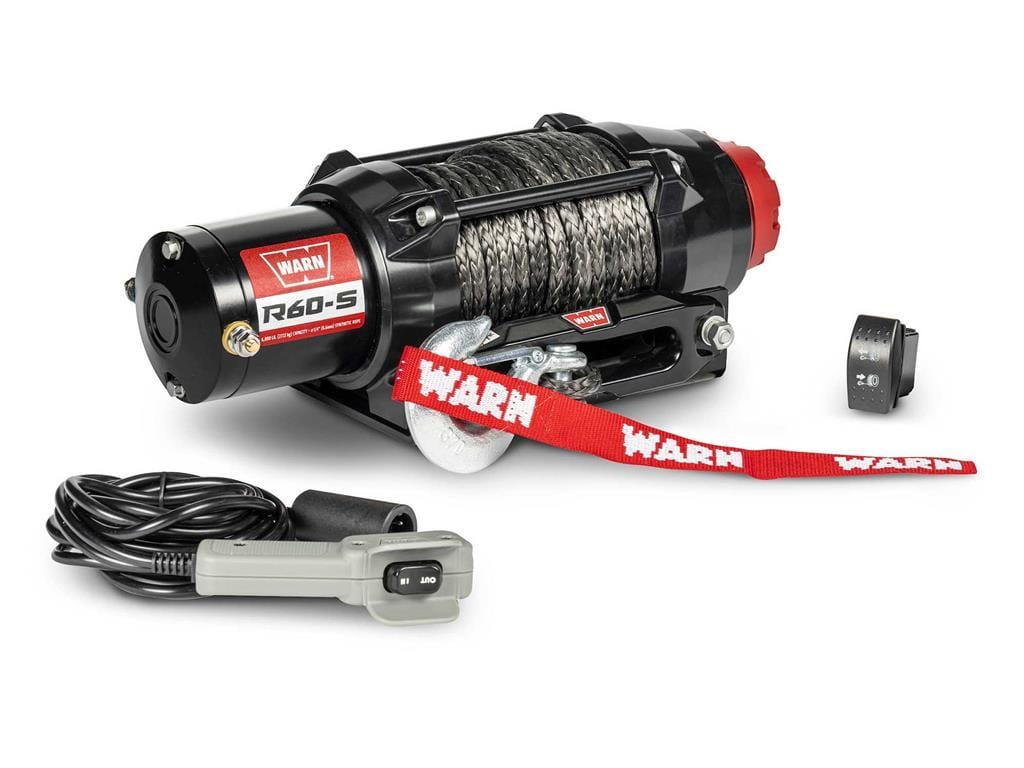
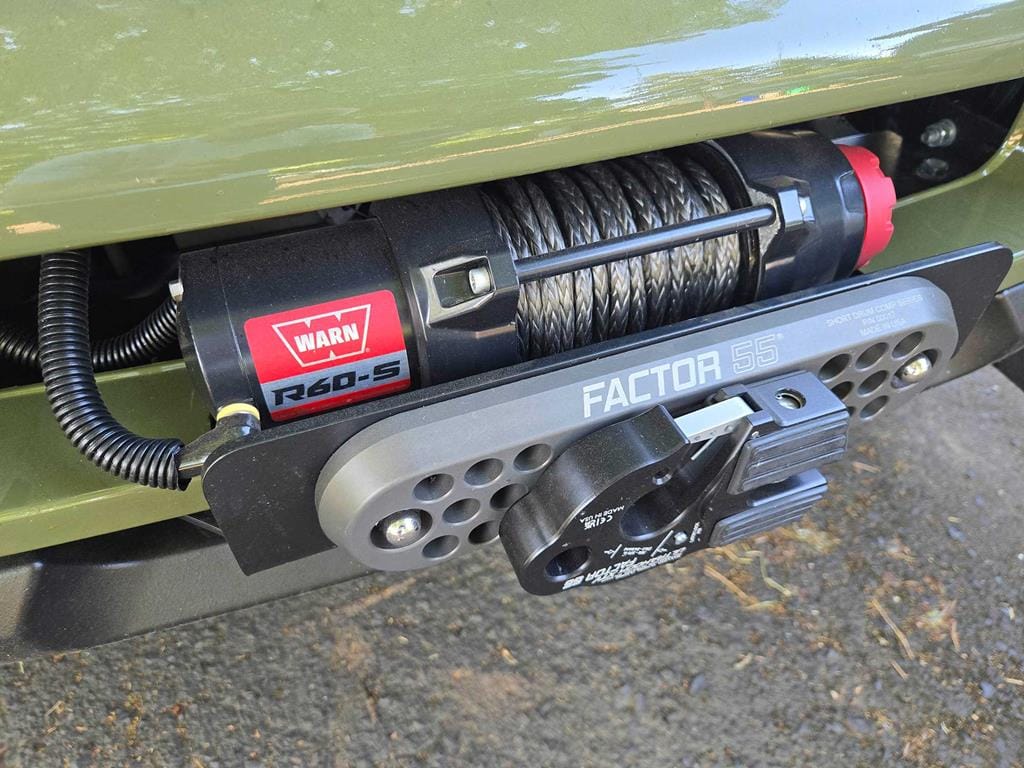
The R60-S is part of Warn's R-Series — a new generation of mid-capacity winches that started with the R25, R35, and R45 (powersports and small-bumper applications) and now extends to the R60-S for full bumper-mounted use on mid-size and lighter full-size trucks. The "S" suffix denotes the synthetic rope configuration, which is the right choice for nearly all overlanders (more on that trade-off below).
| Spec | Warn R60-S | |---|---| | Rated line pull | 6,000 lb (2,722 kg) | | Motor | 12V DC, series-wound | | Gear train | 3-stage planetary, all-metal | | Brake | Automatic load-holding | | Rope | 50 ft × 1/4" Dyneema SK-75 synthetic | | Fairlead | Hawse (aluminum) | | Contactor | Separate heavy-duty solenoid pack | | Mounting pattern | 3.0" × 6.59" (powersports / standard mid-size) | | Dimensions | 14.1" L × 4.7" H × 4.6" D | | Weight (with rope) | ~25 lb lighter than a comparable Zeon | | IP rating | IP67 (dust-tight + temporary immersion) | | Warranty | 5-year mechanical / 3-year electrical | | MSRP | $549.99 |
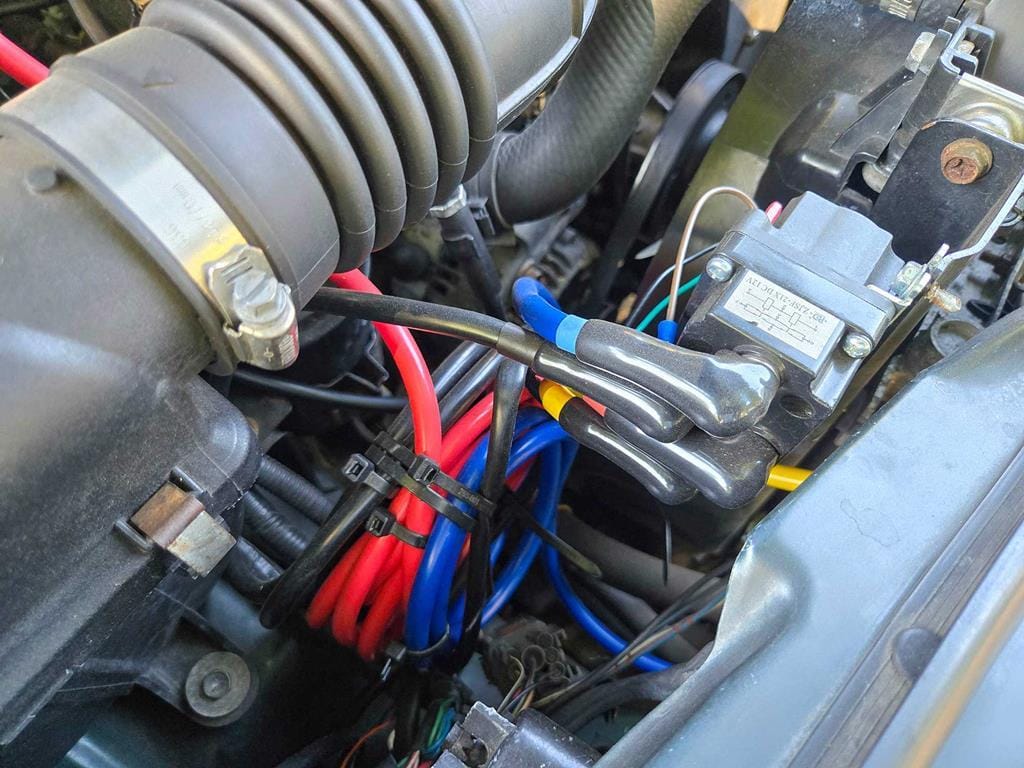
Two things stand out from the spec sheet. First, the separate contactor — the R60-S uses a heavy-duty solenoid pack mounted remotely (typically under the hood) rather than packing the contactor into the winch body. That keeps the winch itself smaller and lighter, and it's the same architecture Warn uses on the Zeon line. Second, IP67. The R-Series line is rated for the kind of dust and water exposure that actually happens on a trail — creek crossings, mud holes, pressure-washer cleaning — not the IP68 of the Zeon but close enough for almost every real-world overlanding scenario.
For full specifications, the Warn R60-S product page is the canonical reference.
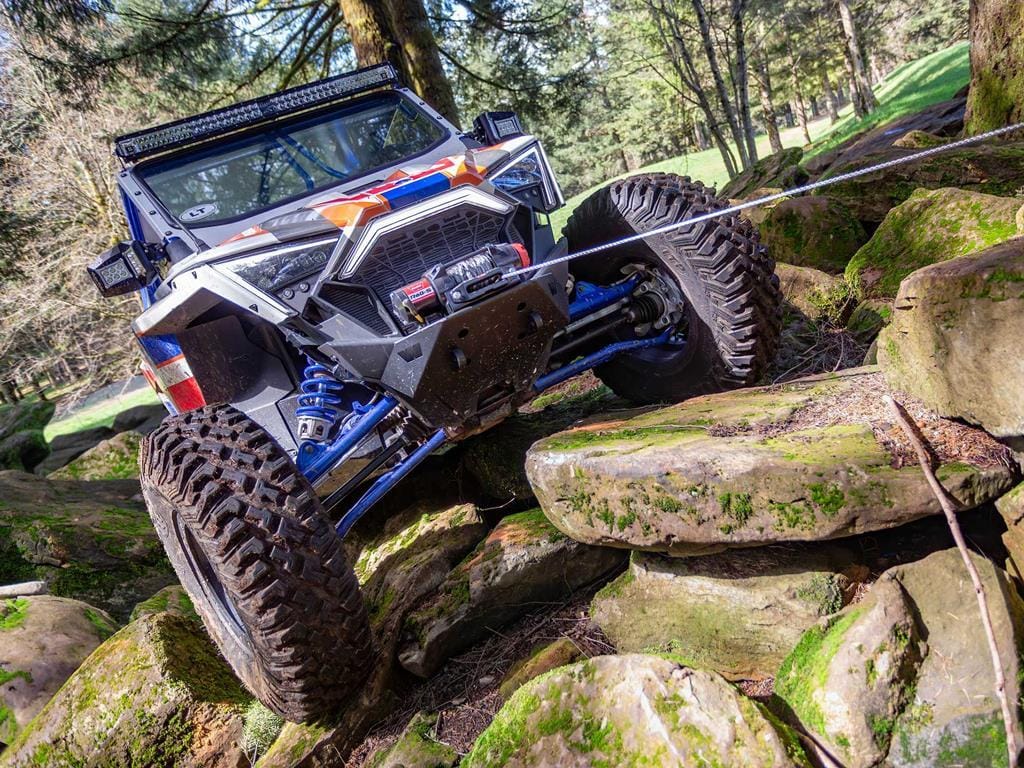
Why a 6,000-lb winch is enough for most rigs
The capacity question is where most overlanders over-buy. The rule of thumb from Warn's own Basic Guide to Winching is that a winch should be rated at roughly 1.5× the gross weight of the vehicle being recovered — which sounds like a lot, until you understand what the math actually means in practice.
A 6,000-lb winch, properly rigged through a snatch block (a pulley that doubles the mechanical advantage), is mechanically capable of moving 12,000 lb of rolling resistance. And rolling resistance — what your rig is actually fighting when it's stuck in a mud pit, a deep rut, or a sand wash — is a fraction of the vehicle's gross weight. A 5,500-lb mid-size truck loaded for overlanding (rack, RTT, bumpers, winch, fridge, gear) has a realistic rolling resistance of maybe 2,000-3,000 lb when stuck. The 6K can move that with no snatch block. Add a snatch block and you can recover up to 12,000 lb of rig weight.
Where the 12K Zeon makes sense is for full-size trucks — a 7,000+ lb F-250 or expedition rig with 5,000+ lb of gear on it. For a Tacoma, 4Runner, Gladiator, Ranger, Colorado, or anything in the 4,500-6,500 lb loaded range, the 6K is genuinely the right number. And the R60-S at 6K is rated for that envelope.
The other thing the 6K gets you is less front-end weight. The 25-lb savings over a Zeon isn't huge in absolute terms, but it shows up in three places that matter on a trail rig:
1. Approach angle. A lighter winch (and lighter fairlead) lets the front bumper sit a little higher relative to the rest of the rig, or lets the bumper itself be designed with a tighter approach profile. 2. Fuel economy. Twenty-five pounds plus the lighter synthetic rope over steel adds up to roughly 40-50 lb of front-end mass saved versus a fully loaded 12K steel-rope Zeon. That's measurable over a year of driving. 3. Front suspension geometry. Less unsprung weight over the front axle keeps the suspension happier on washboard and rock gardens.
The Warn Winch Comparison page lays this out formally — Warn is explicit that mid-size and lighter rigs should be in the R-Series or VRX-Series, not the AXON or ZEON.
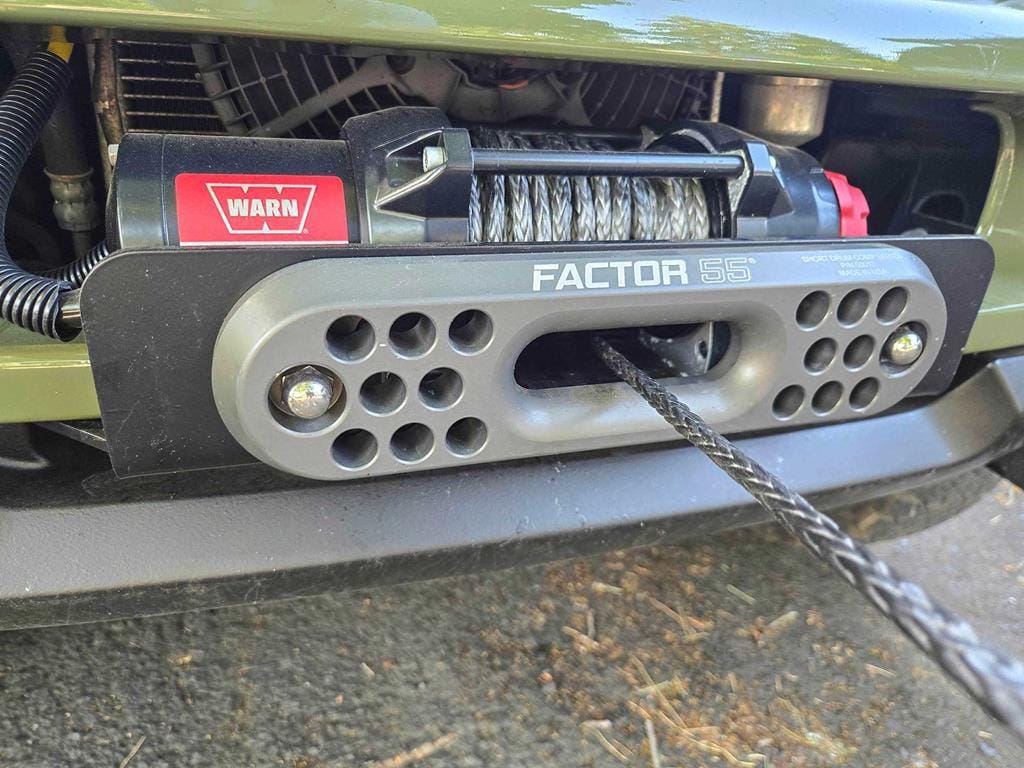
Synthetic vs steel at 6,000 lb — the real trade-off
The synthetic-vs-steel debate is older than the R60-S, but the R-Series is the first Warn line to ship standard with synthetic across the whole range. That's not a marketing choice — it's a weight, safety, and usability argument that has essentially been won for the overlanding use case.
Synthetic (Dyneema / SK-75):
Lighter. A 50 ft × 1/4" synthetic rope is roughly 60% lighter than the equivalent steel cable. That's the source of most of the R60-S weight savings.
Safer. When (not if) a synthetic rope breaks under load, it drops to the ground. When steel cable breaks, it snaps back toward the vehicle with potentially lethal force. This is the single biggest reason serious overlanders prefer synthetic.
Floats. Useful for water crossings and mud recovery.
Easier to handle. No gloves required, no kinking, no sharp burrs.
Wears from UV and abrasion rather than from internal fraying. Visible damage is the failure mode — you see it coming.
Steel cable:
More abrasion-resistant in extreme heat and against sharp rock. Steel can take a beating from granite edges that would cut a synthetic line.
Cheaper in absolute terms.
Heavier, more dangerous when it breaks, prone to kinking.
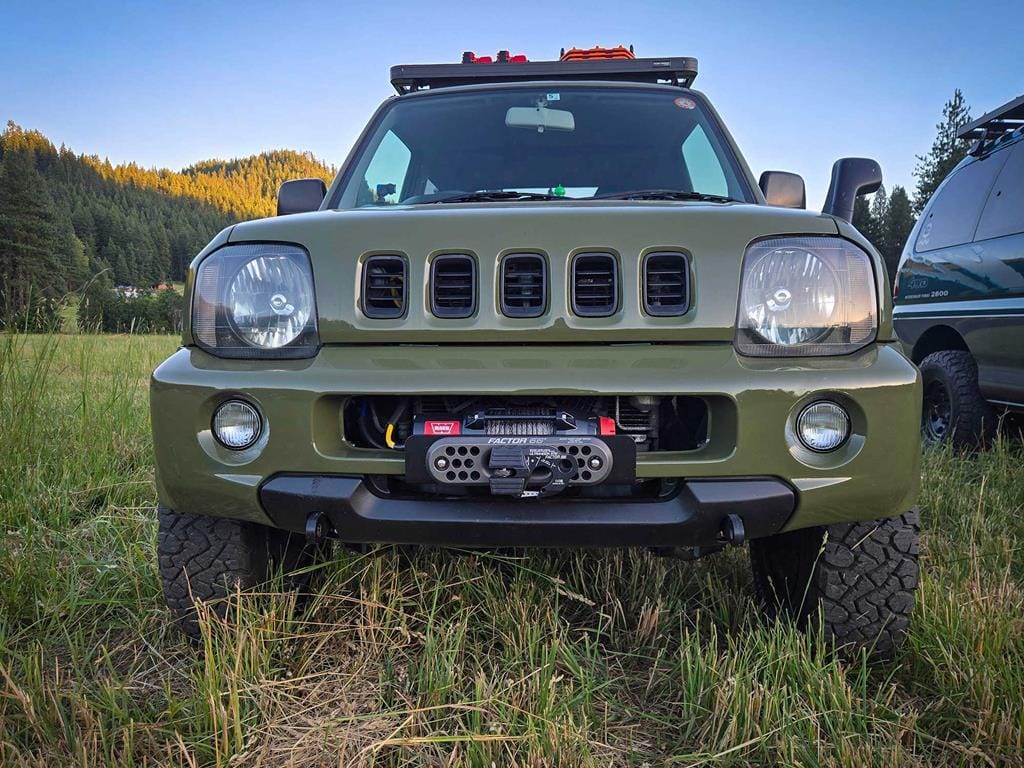
For the overlanding use case, synthetic wins on every axis that matters. The OVRmag review of the R60-S by Andy and Mercedes Lilienthal — published June 26, 2026 — covers the same ground, with real-world testing on a Suzuki Jimny (2,500 lb rig) where the R60-S pulled the Jimny out of a deep mud hole that had stopped the rig completely. Synthetic rope, hawse fairlead, no drama.
Steel cable still makes sense for one niche: commercial recovery, where the winch is in use 8+ hours a day and the heat buildup from repeated steel-on-steel cycling is a real factor. For weekend and week-long overlanding, the synthetic default is correct.
Warn's Winch Rope Information page has the manufacturer-side framing of the trade-off if you want the source.
The R60-S vs the alternatives in the Warn lineup
Warn makes six different winches in the 4,500 to 12,000 lb class, and the R60-S is the newest entry. Here's how the R-Series, VRX, AXON, and ZEON lines compare on the specs that matter:
| Model | Capacity | IP rating | Mech warranty | MSRP | |---|---|---|---|---| | R60-S | 6,000 lb | IP67 | 5-year | $549.99 | | VRX 45-S | 4,500 lb | IP68 | Lifetime | $694.99 | | AXON 55-S | 5,500 lb | IP68 | Lifetime | $1,089.99 | | AXON 55 (steel) | 5,500 lb | IP68 | Lifetime | (similar) | | ZEON 10-S | 10,000 lb | IP68 | Lifetime | $1,713.59 | | ZEON 12-S | 12,000 lb | IP68 | Lifetime | $1,774.49 |
A few things worth noting from this comparison. First, the VRX 45-S at $694.99 is the next step down from the R60-S — a 4,500 lb winch for the lightest rigs (4Runners, Tacomas running minimal gear, Jeeps). At $145 less, it's the budget option, but the 1,500 lb capacity difference matters for heavier loaded rigs.
Second, the AXON 55-S at $1,089.99 is the awkward middle child. The Motactor (integrated contactor) is a slick design, and IP68 is a real upgrade over the R60-S's IP67, but you're paying almost double for 500 lb less capacity than the R60-S. The AXON line is positioned for builders who want the most compact form factor and the highest IP rating — but for the overlanding use case, the R60-S is the better value.
Third, the ZEON 10-S and 12-S are the right choice for full-size trucks. The 7-year electrical warranty (vs the R60-S's 3-year) is meaningful for anyone who actually uses their winch, and the lifetime mechanical warranty is essentially forever. But the $1,200+ price jump from the R60-S is hard to justify unless you're running a 7,000+ lb rig.
For the full lineup, Warn's Powersports Winch Comparison page and the R-Series collection have the complete current catalog with cross-references.
What "self-recovery" actually means (and when 6K is enough)
The scenarios where a 6K winch is genuinely enough are the scenarios most overlanders actually encounter on a trail:
Stuck in mud. A mud pit that has you buried to the axles can usually be self-recovered with a 6K and a tree-saver strap to a solid anchor. The OVRmag Jimny test was exactly this scenario.
High-centered on a rock or root. Recovery here is more about traction and approach angle than winch capacity — a 6K with a properly positioned anchor pulls the rig off the obstacle in most cases.
Bogged in sand. Sand recovery is largely about airing down and using traction boards, but when you need a winch, a 6K through a snatch block is plenty.
Off-camber / sidehill stuck. The lateral component of off-camber recovery is rarely the winch's job — that's about driving technique and tire placement. A 6K handles the longitudinal pull when needed.
The scenarios where you actually need a 12K are narrower than the overlanding market assumes:
Uprighting a tipped rig. If you've rolled your truck onto its side and need to right it, 12K+ is the right tool. (Most overlanders will never be in this scenario, and the better answer is prevention — good tire placement, proper approach angle.)
Recovering another vehicle. A 12K lets you pull out a full-size truck that's stuck. If you regularly travel with a group running 7,000+ lb rigs, the larger winch makes sense.
Commercial / heavy daily use. Mining, oil field, search and rescue — anywhere the winch is in use for hours per day.
The line that the OVRmag review and the broader Warn positioning both arrive at: if you've never had to yank your own rig out of something that a 12K could pull but a 6K couldn't, you probably don't need the 12K. That framing is the entire reason the R60-S exists.
What to know before you install one
The R60-S is a fairly standard bumper-mount install — the same process as any mid-capacity winch. The points worth knowing up front:
Wiring harness. Warn recommends 2-gauge wiring for the 6K class. Most R60-S packages ship with the correct gauge, but if you're buying the winch body only and sourcing the harness separately, don't down-gauge to save weight or cost. The motor draws significant current under load.
Solenoid / contactor mounting. The R60-S uses a separate contactor (relay pack) that mounts in the engine bay — typically near the battery, on a fender well, or on the bulkhead. The wiring from the contactor to the winch is heavy-gauge and should be routed away from heat sources and moving parts.
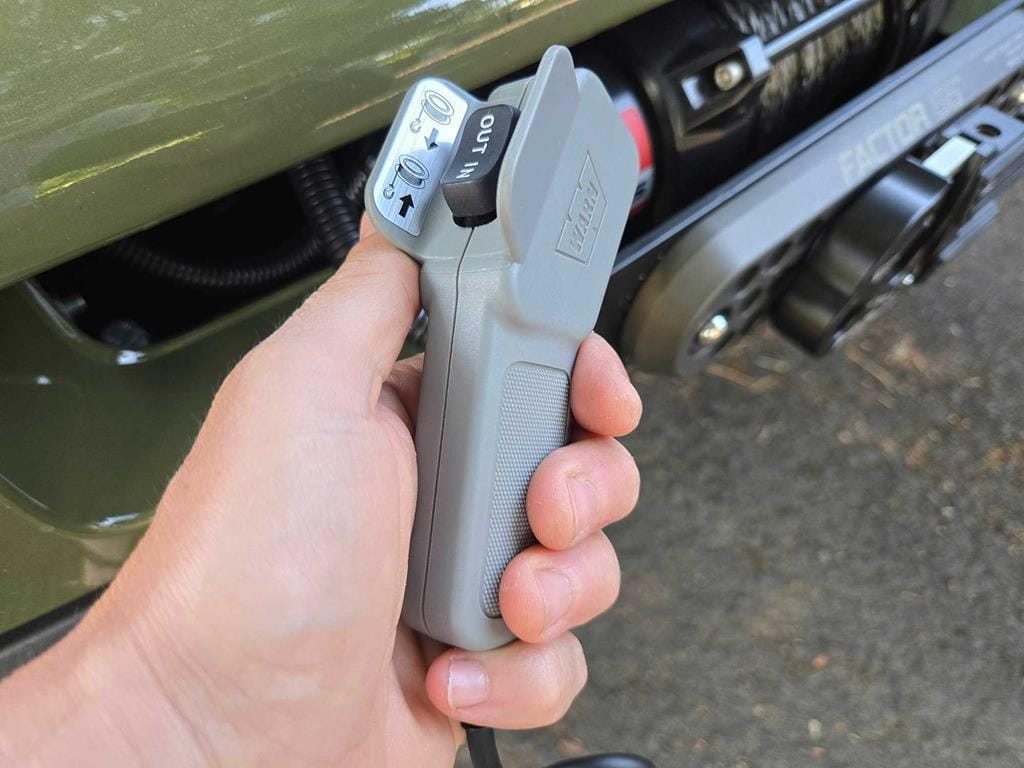
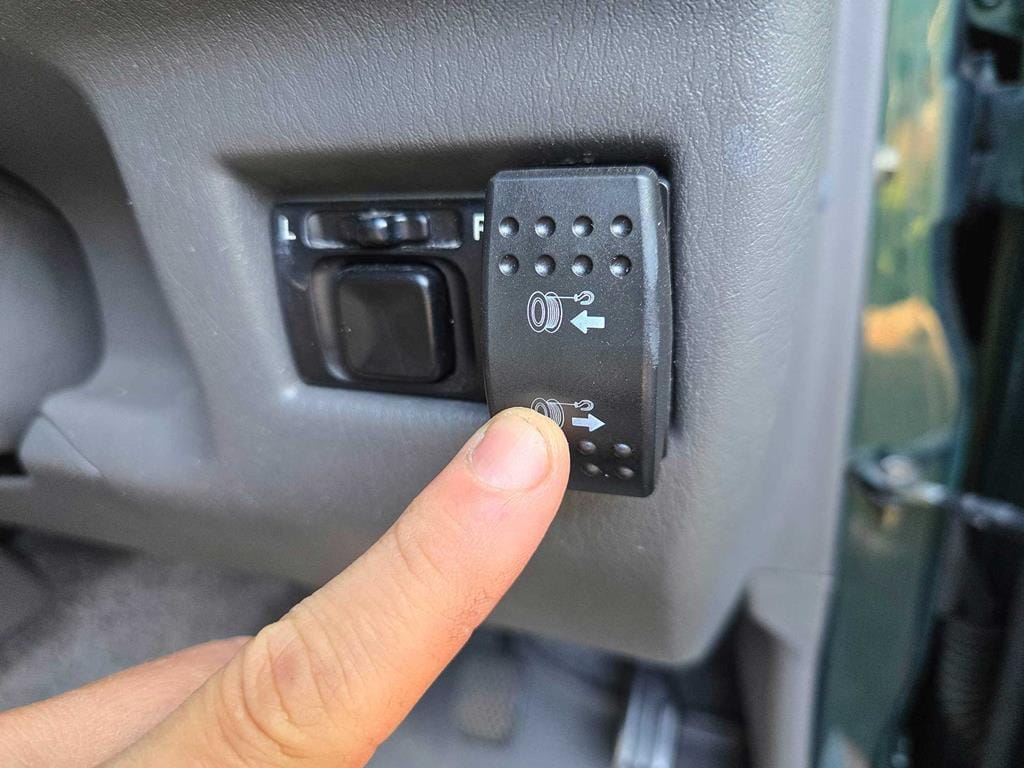
Controller placement. R60-S ships with a rocker switch and a corded remote. The rocker switch mounts in-cab (typically in an unused switch panel location); the corded remote plugs into a connector on the winch or contactor for spotter use. Wireless remotes are available aftermarket if you want them.
Hawse vs roller fairlead. The R60-S ships with a hawse (smooth aluminum) fairlead, which is correct for synthetic rope. Do not put synthetic rope on a roller fairlead — the rollers will abrade the line and cause premature failure. If you ever switch to steel cable, you'd swap the hawse for a roller fairlead at the same time.
Break-in. Warn recommends a slow-speed, no-load cycle of the full rope length in and out before first real use. This seats the rope on the drum and identifies any manufacturing defects early.
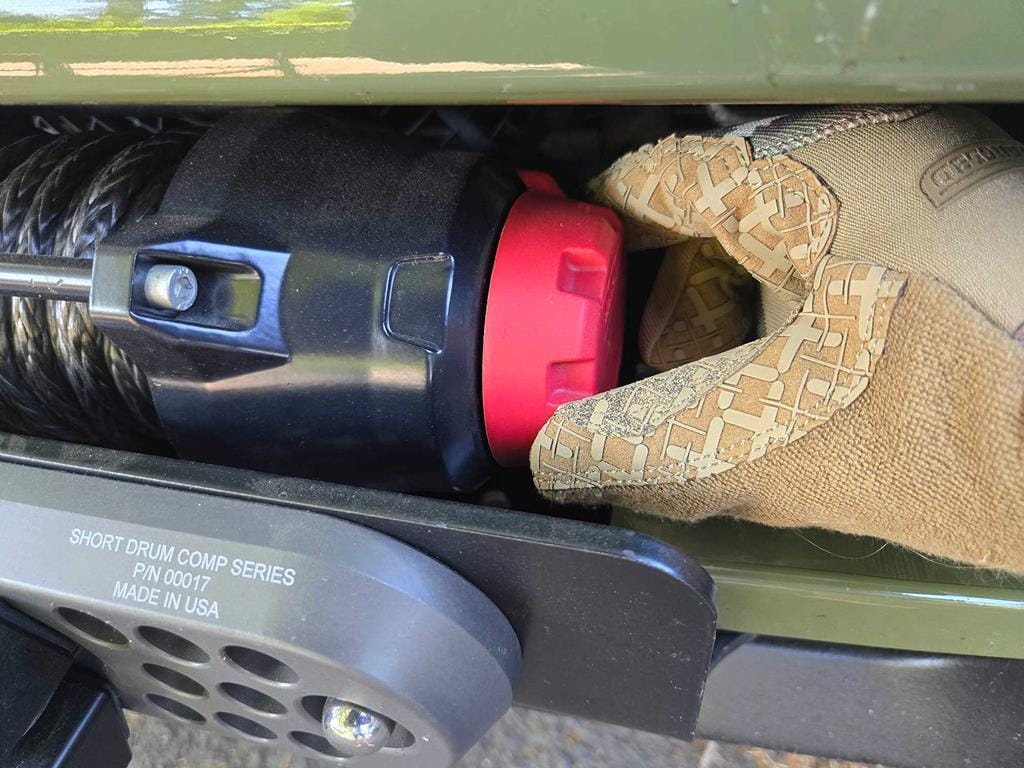
The R60-S is also worth noting for its clutch design — a free-spool clutch that lets you pay out the rope by hand quickly. The OVRmag review covered this in detail; the clutch engagement lever is metal, positive-engaging, and clearly marked for free-spool vs locked.
Who the R60-S is for, and who should step up
The decision matrix is short:
Get the R60-S if:
You drive a mid-size truck (Tacoma, Ranger, Colorado, Gladiator, Frontier) or a lighter SUV (4Runner, GX, Wrangler, Discovery)
Your loaded rig weight is under 6,500 lb
You want a winch for self-recovery, not commercial or expedition use
You prefer synthetic rope and the weight/safety advantages it brings
You want Warn quality without the Zeon price
Step up to the ZEON 10-S or 12-S if:
You drive a full-size truck (F-150/250/350, Tundra, Sequoia, Expedition, Yukon, Suburban)
Your loaded rig weight is 7,000+ lb
You regularly travel with a group running heavier rigs
You want the IP68 rating and 7-year electrical warranty for heavy-use scenarios
You need to upright a tipped rig as a realistic recovery scenario
Step down to the VRX 45-S if:
Your rig is a Jeep Wrangler, lighter 4Runner, or a heavily weight-stripped overland build
You want the lifetime mechanical warranty and IP68 rating
The $150 savings matters and the 4,500 lb capacity is enough for your rig
The R60-S lands in the middle of that matrix and that's exactly where Warn positioned it.
The OVRmag verdict and a W7BR framing
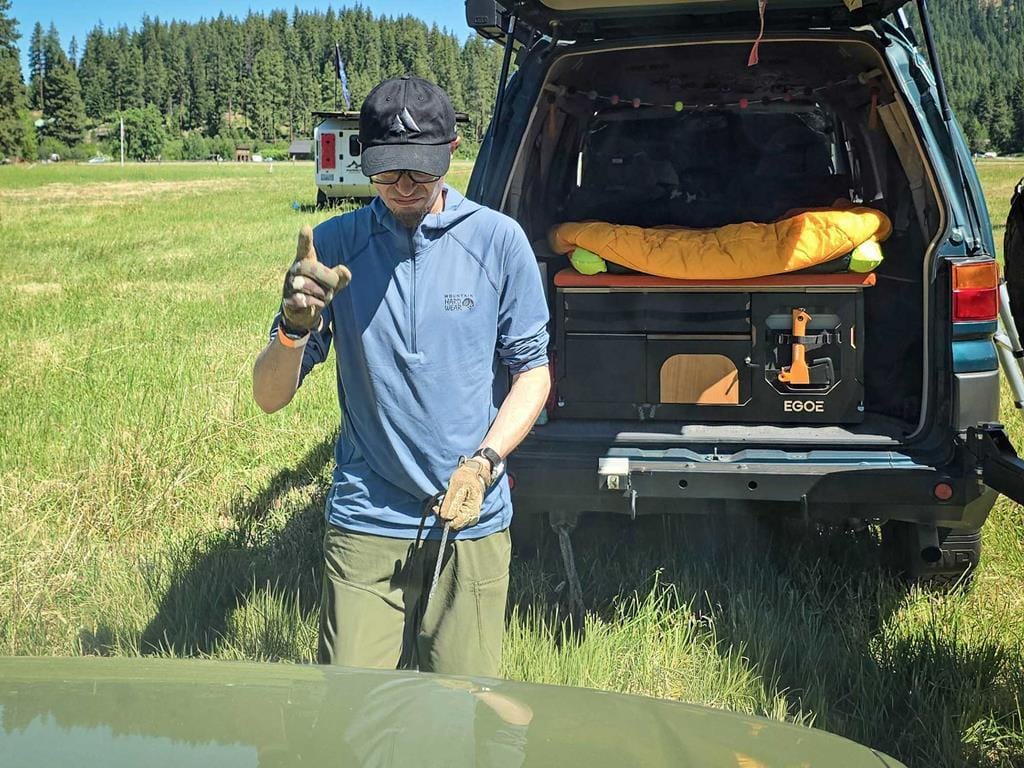
The OVRmag review by Andy and Mercedes Lilienthal ran the R60-S through a real-world field test on a 2,500-lb Suzuki Jimny in PNW conditions. The verdict: the R60-S did everything Warn claims, with the synthetic rope paying out smoothly under load, the clutch operating cleanly, the contactor handling repeated cycles without heat issues, and the IP67 rating holding up through mud and water crossings. The downsides the review flagged were minor: the rocker switch is plastic (not uncommon at this price), the synthetic rope is the same SKU Warn uses on the VRX (not a new formulation), and the mounting hardware is the standard powersports pattern (3.0" × 6.59") which fits most mid-size bumpers but not all full-size aftermarket bumpers without an adapter plate.
The framing for W7BR readers: if you're a mid-size-truck or lighter-SUV overlander and you've been eyeing a Zeon because you thought you needed the 12K, the R60-S is the answer to a question you didn't know to ask. At $549.99 with a 5-year mechanical warranty and the same Warn build quality as the Zeon line, it's the right tool for the way most of us actually use our rigs. The capacity class is real, the weight savings are real, and the price is real.
For more on the broader question of right-sizing gear for how you actually overland, see Marty's coverage of the Overland Expo PNW 2026 show and the recent $68B problem piece on the industry-wide tendency to over-spec and over-spend.
Sources and further reading
Warn R60-S product page — manufacturer specs, MSRP, warranty
OVRmag Warn R60-S review — independent field test (Andy and Mercedes Lilienthal, June 26, 2026)
Warn R-Series collection — full R-Series lineup
Warn AXON 55-S product page — comparison point at the integrated-contactor end
Warn ZEON 12-S product page — comparison point at the 12K end
Warn ZEON 10-S product page — comparison point at the 10K end
Warn VRX 45-S product page — step-down option
Warn Winch Comparison — manufacturer comparison page
Warn Powersports Winch Comparison — R-Series positioning
Warn Basic Guide to Winching — the 1.5× GVWR sizing rule
Warn Winch Rope Information — synthetic vs steel trade-off
Warn Know Your Gear — installation and integration guidance
About the Author
Brent Conklin
Owner of Whiskey7backroads and avid explorer. I am a Ham Radio extra class operator and frequent the Old Miss Net. I have been married for 35 years to Cheryl and we have 2 boys and 2 dogs.