

28,500 people packed into one expo. $40B in 2026, headed to $68B by 2036. 14,000 acres outside Zion just closed. The industry is eating its own playground and most overlanders do not see it happening.
I have been thinking about this for a while
This year I could not attend the first Overland Expo of 2026. I love going to these and when I can't attend in person, I still enjoy watching the videos of the event. But one thing has become clear, and I have been thinking about this for a while, and I think it is finally time to say it out loud. The overlanding industry is growing so fast that it is starting to eat itself alive, and a lot of us, myself included, have not been paying close enough attention to notice. The numbers are not subtle, and once you see them you cannot unsee them.
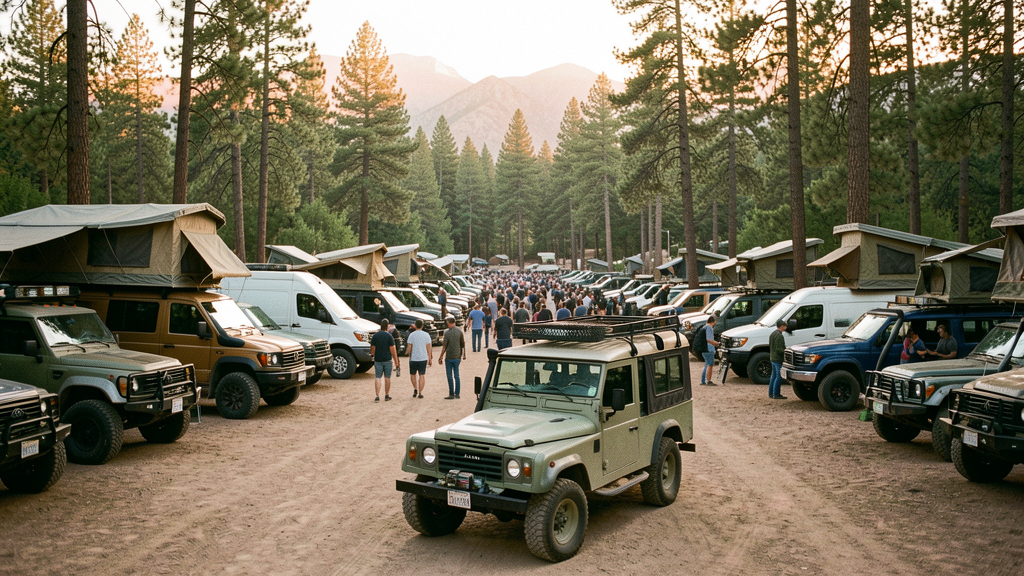
I remember the early ones, smaller crowds, more trucks than Sprinters, more homemade bumpers than $4,000 roof top tents. This year there were 28,500 in attendance, and you could feel the energy thru the videos of the people who did walk arounds. There were 420 vendors and 323 classes. I started to think back about the first shows I attended and something started to become very clear. This year there were Suburbans with $30,000 in aluminum bumpers. Sprinter 144s with rooftop AC units and Starlink dishes bolted to the roof, parked next to a 40 year old Toyota pickup with a camper shell and a Hi-Lift jack. Both of these rigs are overlanding. The community is bigger than ever, and it is also more divided than ever.
The number that should scare all of us
But here is the number that should scare all of us. The overlanding market was $40.92 billion in 2026. By 2036, it is projected to hit $68.17 billion. I have been looking at industry reports for years now and that growth rate is not slowing down. New vehicle prices are up 10.4% year over year according to KBB. Tariffs have added $30 billion in costs in a single year. Aftermarket parts prices are surging, 50% from Mexico, 12% Canada, 8% China. The whole stack is more expensive than it was two years ago, and yet more people than ever are buying in. The growth is real. The growth is also a problem.
Cheryl and I have been doing this long enough to remember when you could roll into a small town in the desert and find a campsite for free and have it to yourself. That is not a thing anymore in most of the popular places. Last spring we tried to find a quiet spot outside of Moab on a Thursday afternoon in March and ended up driving 40 miles past Green River before we found a single pull-off that was not already occupied. We have been going to that area for 22 years. Twenty-two years ago you had your pick of spots. Now you have your pick of crowds.

What just happened outside Zion
Let me tell you what just happened outside Zion National Park, because it is the part of this story that I cannot stop thinking about.
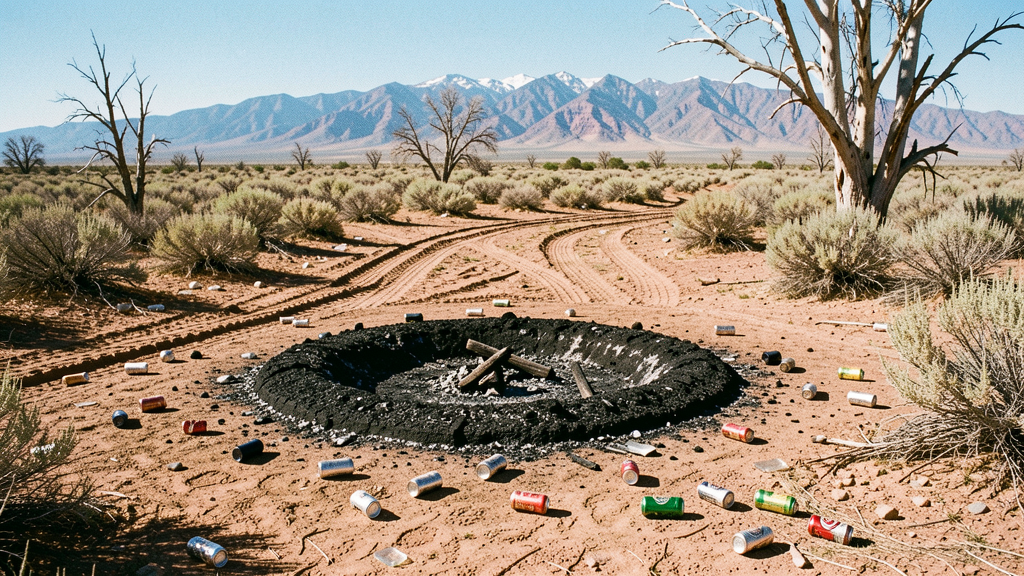
The SR9 corridor, 14,000 acres of public land just outside the east entrance of Zion, just got closed to dispersed camping. Final rule. Not a proposal. Signed and posted in the Federal Register. The reason given was resource damage, trash, human waste, illegal fire rings, the kind of stuff that happens when too many people find the same place at the same time. I have seen that damage myself. I have packed out other people's beer cans from campsites I have stayed at for 20 years — and so have most of the people I camp with. I have driven past sites that used to be quiet pull-offs that are now basically overflow parking lots for instagram reels. So I am not going to sit here and say the closure is unjustified. It is justified. What I am going to say is that it is also avoidable, and the way the industry handled it made it worse.
The BlueRibbon Coalition has been documenting what they call a manufactured cycle of closures. Their reporting shows that a study commissioned by the Southern Utah Wilderness Alliance, SUWA, was used as part of the justification package for the SR9 closure. That study was funded specifically to advocate for the closure. It was not neutral science. It was advocacy dressed up as data. The Forest Service and the BLM used it anyway, because it confirmed what their budget-strapped staff had been saying for years, that the sites are overused, and that they do not have the staff to manage them. So the path of least resistance was to close them. SUWA got what they wanted, the agencies got to reduce their workload, and the rest of us lost access to land that was open to us last summer.
And once that template works, it works again. The same playbook, the same advocacy study, the same "resource damage" framing, you can drop it on a dozen other sites across the West. We are going to see more of these, not fewer. I will bet on that right now.

I am part of the problem too
I am going to say something that might be unpopular. A lot of us, and I am including myself in this, have been part of the problem. We post a campsite on Instagram, we tag the location, we use the right hashtags, and 18 months later that spot is overrun. I have done it. You have probably done it. The algorithm rewards it, the engagement feels good, the brands notice, and we tell ourselves we are just sharing the love of the outdoors. We are. We are also painting a target on every place we love.
I have been more careful the last couple of years about what I post publicly and what I keep to myself. I am not going to be the guy who kills his favorite spot by sharing it with 50,000 strangers. There are a couple of places Cheryl and I have been going to since before the kids were born that I will never tag, will never name in a video, will never put in a public post. They are family places. They stay family places.
If you are a content creator in this space — and I think a lot of us are, in one way or another — you already know this. You are just hoping nobody else does. The math is unforgiving. A reel with the right tags can put 5,000 people at a campsite that holds 8 vehicles. It does not matter how good the content is. The math wins.
The cultural split that nobody wants to talk about
There is a split in the overlanding community that has been growing for a while and I do not think we talk about it enough. On one side you have the off-road crowd, lockers, 40 inch tires, $20,000 in suspension, winches, low range, the kind of build that actually goes technical. On the other side you have the new overlanding crowd, long travel campers, espresso machines, Starlink dishes, rooftop AC units, the kind of build that goes to a KOA with a private site and calls it overlanding. Both groups call themselves overlanders. Most of them have never met. They exist in different expo halls, different Instagram feeds, different YouTube algorithms.
I have nothing against either group. People spend their money how they want to spend their money. But the practical reality is that the second group is 80% of the growth. The market research is pretty clear on that. The dollar volume is in the lifestyle gear, the rooftop tents, the awnings, the lithium batteries, the overland-branded apparel. The actual hard-core off road rig is still a niche within a niche. So when the industry says overlanding is booming, they mean the lifestyle side is booming, and the lifestyle side is the one that drives the social media engagement, and the social media engagement is what is painting the targets on the backcountry.
This is not a judgment. I am a 58 year old guy with a Cummins and a 60 gallon aux tank and a Maglight in the door pocket, and I have done plenty of judgment-free overlanding in my time. I started camping on the ground with my tent, had a jeep with a rooftop tent on top a home-made trailer, 4 Wheel camper and now the Earthcruiser. I get why people want a more comfortable setup. I also know that the comfortable setup is the one that is generating the kind of foot traffic that gets the dispersed sites closed. We are going to have to figure out how to talk about this without starting a fight, because the fight is the other thing the industry does not need right now.
What just changed in Washington
The SR9 closure is not the only thing happening. It is the canary in the coal mine. In May 2026, an executive order rolled back a bunch of Biden-era public land restrictions. The BLM rescinded the Public Lands Rule, which was the 2024 rule that was supposed to prioritize conservation over multiple use. The USDA rescinded the 2001 Roadless Rule, which protected 45 million acres of National Forest from road construction and timber harvest. None of this is going to be good for dispersed camping. None of it is going to be good for the kind of overlanding most of us do, which is the kind that requires public land, not private campgrounds.
I will be honest with you — this part is hard. The off-road community is divided on these rescissions. A lot of the hardcore off roaders see the Roadless Rule as federal overreach and are glad to see it gone. They have a point. The rule was written by people who do not drive a Jeep into the woods. A lot of the overlanding crowd is terrified, because they see what is coming next, which is more logging roads, more fragmentation, more oil and gas leasing, more pressure on the same backcountry spots that are already under siege from overuse. Both of those readings are partially right. That is what makes it hard to talk about.
The industry is bigger than ever, the equipment is more capable than ever, and the access is shrinking under our tires. That is the math that nobody wants to talk about. So let us talk about it for a minute.
What I am actually doing about it
I want to give you the practical side of this, because I do not want to be the guy who complains without offering something to do about it.
First, the cheap and easy stuff. Stop geotagging your campsites. I mean it. Take the photo, post it, but do not tag the location. Use the county or the general region if you must, but not the specific spot. If you are posting for a brand, even better, ask them in writing not to tag the location. A few of them will listen. Most will not. But the more of us who make the ask, the more the industry starts to feel pressure to change. The companies that listen will get our business. The ones that do not will get our silence.
Second, get involved with the access fight. The BlueRibbon Coalition is the easiest entry point, they have a form on their website where you can submit comments on active land use proposals, takes about 10 minutes, and it actually matters. Public comment periods on federal land decisions are when the agencies are required to listen, and the people who show up are mostly the ones who want the closures. The overlanding community is bigger than the off road community, and most of us are sitting this fight out. We need to stop sitting it out.
Third, support the small businesses that are doing this right. There are outfitters and guides in places like Mexican Hat, Enterprise, Bishop, and Globe who have been quietly advocating for access for decades. They are not making YouTube videos about it. They are showing up to county commission meetings and writing letters to their state BLM office. When you book a trip, ask them what they are working on. When you buy gear, ask the brand if they donate to access advocacy. Vote with your wallet.
Fourth, and this is the one I have been working on personally, build a community of people who actually know how to behave in the backcountry. Pack out your trash. Use a wag bag if you have to. Do not cut switchbacks. Do not drive through wet meadows. Do not light a fire ring bigger than a dinner plate. Cheryl and I have been on the road long enough to know that the loudest advocates for land access are usually also the people who treat the land the worst. That has to stop. We are the ones who lose access if we keep behaving like tourists in our own public lands.
Fifth, and this is the one nobody wants to hear, you do not have to spend $80,000 to be an overlander. The industry would love for you to believe that you do, and the social media algorithm rewards the people who post the most expensive builds, but the actual activity, the part that matters, does not require a $200,000 rig. I have done multi-week trips in a stock Jeep with a ground tent. I have done month long trips in my 2014 Earthcruiser. None of those trips were less fun because the truck was less expensive or more expensive. The truck just got me there and back. The trip was the trip, and the trip did not care what I was driving. The industry has spent a decade telling you that the gear is the hobby. The gear is not the hobby. The places are the hobby. Do not let the marketing fool you, and do not let the $200,000 Sprinter at the next trailhead make you feel like you do not belong. You belong. The trail is public.
What I saw at the expo
I looked at the new gear at Overland Expo this year. Some of it is genuinely good. The new Thule Widesky rooftop tent is built better than anything Thule has put out in the last decade. The 23Zero Kabari is a serious piece of engineering, designed for Australian outback conditions, which means it will hold up to anything the American West can throw at it. The REDARC solar panels are getting thinner and more efficient every year. The new ARB winches are noticeably faster than the older models. The Starlink Mini is genuinely a game changer for anyone who works from the road, I do not care what the naysayers say, it works — it just works.
But some of the gear is just nonsense. The Winnebago ARKA at $331,901 is not an overland vehicle, it is a status symbol with a marketing department. The AT Overland Aterra at $32,000 is a trailer you do not need if you already have a truck with a bed. The price gap between a $25,000 used 4Runner with a $3,000 roof top tent and a $200,000 Sprinter with a $30,000 buildout is not a quality gap, it is a marketing gap. The 4Runner will get you to the same campsite. It might even get you there slower, which is the point.
I will say this directly. If you are new to overlanding and you are reading this and you are feeling like you cannot afford to get into it, you can. A 2005 Toyota 4Runner with 180,000 miles costs about $8,000. A used roof top tent costs about $1,500. A pair of Maxxis Razr tires costs about $1,200. A basic recovery kit is $300. A good cooler is $400. A decent battery setup is $800. That is $12,200 and you are overlanding. You are not going to win any Instagram contests. You are going to have a great time. Cheryl and I ran a setup like that for years before we ever upgraded to the EarthCruiser. We still have a lot of fun memories when we had older rigs. Do not let the $200,000 Sprinter crowd tell you that you are not real.

Where this all lands
The growth in overlanding is not the enemy. I love that more people are getting outside. I love that families are camping with their kids. I love that there is a whole economy built around teaching people how to enjoy the backcountry. What I do not love is the part where the industry is so focused on the gear and the builds and the next expo that we are not paying attention to the access. The access is the part that matters. The access is the part that is shrinking. The access is the part that is going to determine whether the kids we are taking camping this year are going to be able to take their kids camping in 20 years.
I will keep going to the expos. I will keep writing about the gear. I will keep posting photos of the Earthcruiser. But I am going to be a lot more thoughtful about what I share and how I share it. And I am going to keep showing up to the public comment periods, and I am going to keep writing letters to my state BLM office, and I am going to keep supporting the small businesses that are doing the actual work of keeping public land open. If you have read this far, I hope you will do the same.
Hit me up in the comments if you have a favorite spot you have been keeping quiet about. I will not publish it. I will just be glad to know it is still out there.
 YT Videos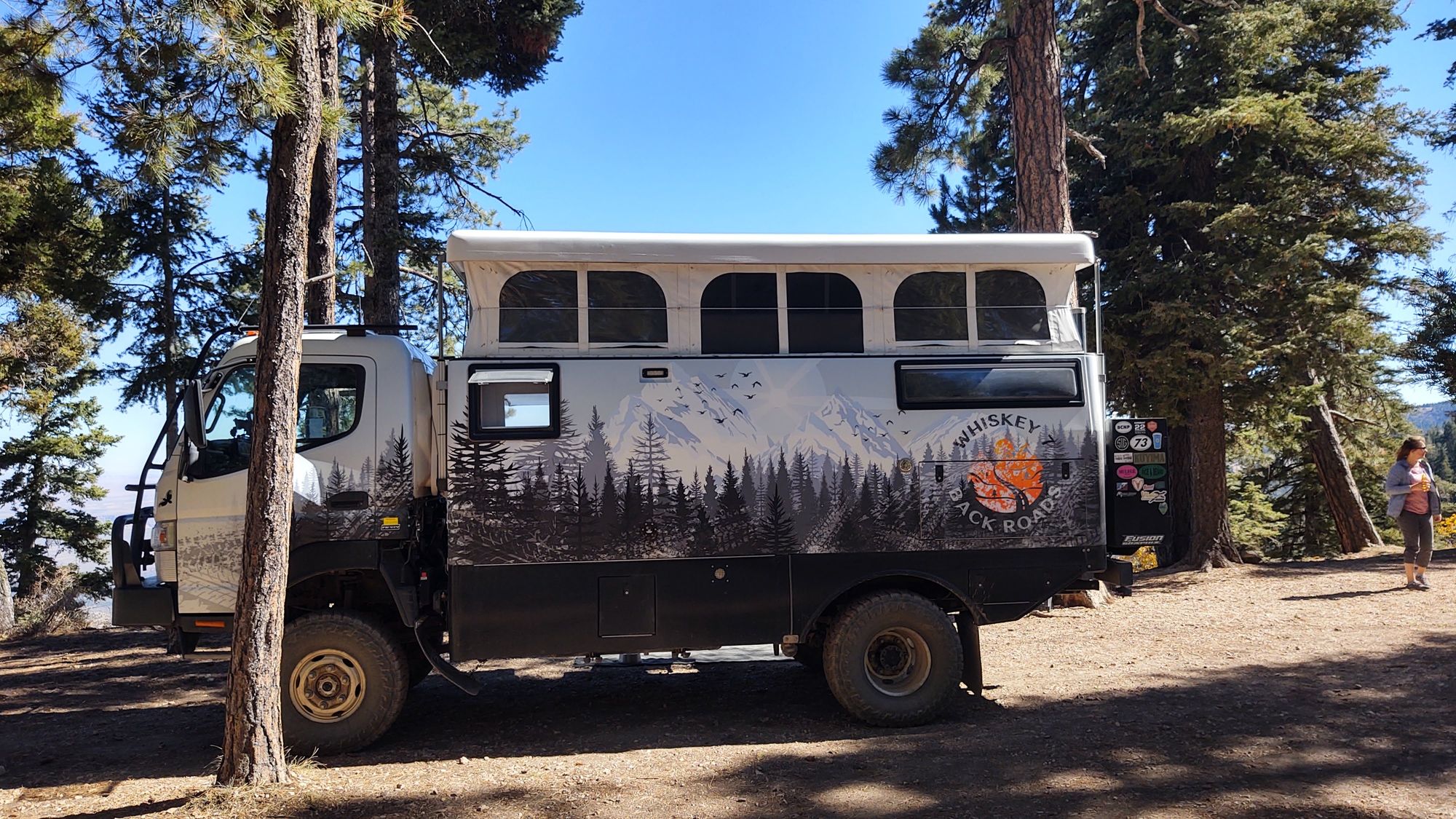
Brent Conklin, owner of Whiskey 7 Backroads